

The realization that one's relationship with food has become disordered tends to arrive quietly, and late. The behaviors that signal a problem look, from the outside, like discipline: restriction reads as health-consciousness, rigidity as commitment. These patterns are also broadly culturally endorsed, which is part of why they can persist for years before anyone, including the person living inside them, recognizes that something has gone wrong.
When health gets defined primarily through body shape and size, eating becomes less about nourishment than about managing appearance. That framing runs deep in medicine and in mainstream wellness culture alike, and it has a name—weight stigma. It impacts who gets access to appropriate care, as an individual can be operating in a state of significant nutritional deficit that doesn’t match the social perception of an eating disorder.
Relationships with food carry real complexity. They intersect with culture, with medical conditions like diabetes or food allergies, and with experiences of pleasure and connection. Recovery from an eating disorder, or simply a less fraught relationship with food, tends to begin with small, specific shifts rather than wholesale transformation. Here are 5 places to start.
1. Learning to Hear Hunger Again
Hunger cues are not uniform across people, and they are not stable within a single person across time. The classic stomach growl is one signal among many; others include low energy and a creeping irritability that can be easy to misattribute to other causes. For people who have restricted their intake for extended periods, these signals may become muted as the body adapts to chronic underfueling, a temporary condition, but one that makes relearning hunger a gradual process.
Evelyn Tribole and Elyse Resch named this as one of the foundational principles in Intuitive Eating, their framework for rebuilding the internal attunement that dieting and food rules tend to erode over time. Honoring hunger and feeling fullness are about restoring trust in a body whose signals have been systematically overridden, sometimes for years.
The cues that return during recovery may feel unfamiliar or difficult to interpret at first, and acting on them can feel counterintuitive to someone whose relationship with hunger has long been adversarial. Relearning hunger cues starts with adequate nutrition, feeling fullness comes from practicing observing the body's signals objectively. Often, a structured program with scheduled meals and support from a registered dietitian can be helpful with this step.
2. Giving Yourself Permission to Eat
When a food is categorically off-limits, it accumulates psychological charge. Forbidden foods generate preoccupation in a way that permitted foods rarely do, and that preoccupation has a logic to it: the restriction creates the fixation. Eating something you have labeled as bad generates guilt; continuing to avoid it generates a different kind of noise, the mental effort of tracking something that has been assigned moral weight.
Food does not have ethical properties. A meal is not a character assessment, and the habit of sorting eating choices into good and bad categories tends to create more psychological distress than it resolves. The language of clean eating and cheat days operates within the same logic, one that positions eating as something requiring justification.
3. Eating with Attention
Eating with attention draws on two related ideas: being present during a meal, and being attuned to whether it's actually satisfying.
Mindful eating means paying full, nonjudgmental attention to the experience of eating: the sensory qualities of food, the physical sensations that shift across a meal, and the thoughts that arise around it. For someone who has spent years relating to food through anxiety or moral calculation, that kind of presence can take real practice to rebuild.
Gratification is the other half of eating with attention, and it is just as often disrupted by disordered eating as sensory awareness is. The satisfaction factor is a foundational principle in Intuitive Eating, one that argues pleasure is not incidental to nourishment but central to it. Eating something enjoyable, in an environment that allows for some degree of ease, is part of what allows a meal to register as complete. When food has been stripped of pleasure entirely, eating becomes mechanical.
There are small, concrete ways to begin practicing both elements of eating with attention.
- Put your phone down and away from the table
- Pause before eating and notice the smell or temperature of the food
- Prepare and eat foods that you enjoy
- Set aside a dedicated time and place for meals
- Bring some beauty or routine to mealtime, whether it’s fresh flowers at the table or drinking from your favorite mug at breakfast
4. Dropping the All-or-Nothing Thinking
Cognitive distortions are automatic thought patterns that skew perception in ways that feel entirely rational from the inside. All-or-nothing thinking is a common cognitive distortion, and it shows up across anxiety, perfectionism, and disordered eating with striking consistency. Applied to food, it collapses the entire spectrum of eating experience into two states: on track or derailed.
What that framework almost always produces is the same moral dimension that impacts our ability to give ourselves permission to eat, and it has nothing to do with nutrition. Foods become good or bad, and the person eating them becomes, by extension, someone who is doing well or someone who has fallen short. That is a significant amount of psychological weight to bring to something the body requires several times a day.
Developing flexibility around food means being able to respond to what the body needs on a given day. That capacity to adjust is what all-or-nothing thinking erodes.
5. Rethinking Exercise
One of the more common distortions in a disordered relationship with food is the inversion of how food and movement relate to each other. Movement gets framed as compensation for eating, a way to offset or justify a meal, when the relationship runs the other direction entirely. Food fuels movement.
One way to rethink exercise is to take stock of everything metabolism is responsible for. Food powers brain function, cellular repair, immune response, and every system the body runs around the clock. The brain alone requires a steady supply of glucose to function, and the nervous system depends on dietary fat to maintain the myelin that keeps signals moving.There is something clarifying about seeing food at that scale, as infrastructure rather than input.
The second shift is in how movement gets chosen. Joyful movement, a concept rooted in Intuitive Eating's ninth principle, means moving in ways that feel good or are genuinely fun, chosen for reasons that have nothing to do with appearance or compensation. Functional movement is chosen for what it makes possible: the balance work that becomes protective as we age, the walking endurance built before a trip somewhere that demands it.
A reason to move that is rooted in how the body feels is more durable than one rooted in what the body has consumed. When the body is adequately nourished, movement becomes just one of many things it can do well.
Conclusion
A disordered relationship with food develops inside a culture that has long measured health through appearance and treated weight as a reliable proxy for how well someone is caring for themselves. That shapes how people relate to food, as well as who gets taken seriously when they seek help.
The five shifts described here are small by design. They are places where something can loosen, where the grip of old rules and borrowed judgments can begin to ease. For many people, that process moves faster with support, and for some it requires clinical care. Either way, the relationship can change.
The Kahm Center is a partial hospitalization and intensive outpatient program for eating disorder treatment and recovery in Burlington, Vermont. Our approach integrates therapeutic care with a focus on nutritional and metabolic health, using tools like metabolic testing and body composition analysis rather than outdated measures like BMI to offer a deeper understanding of health that challenges weight stigma. If you or someone you love is struggling, we would be glad to hear from you.
Clinically Reviewed By
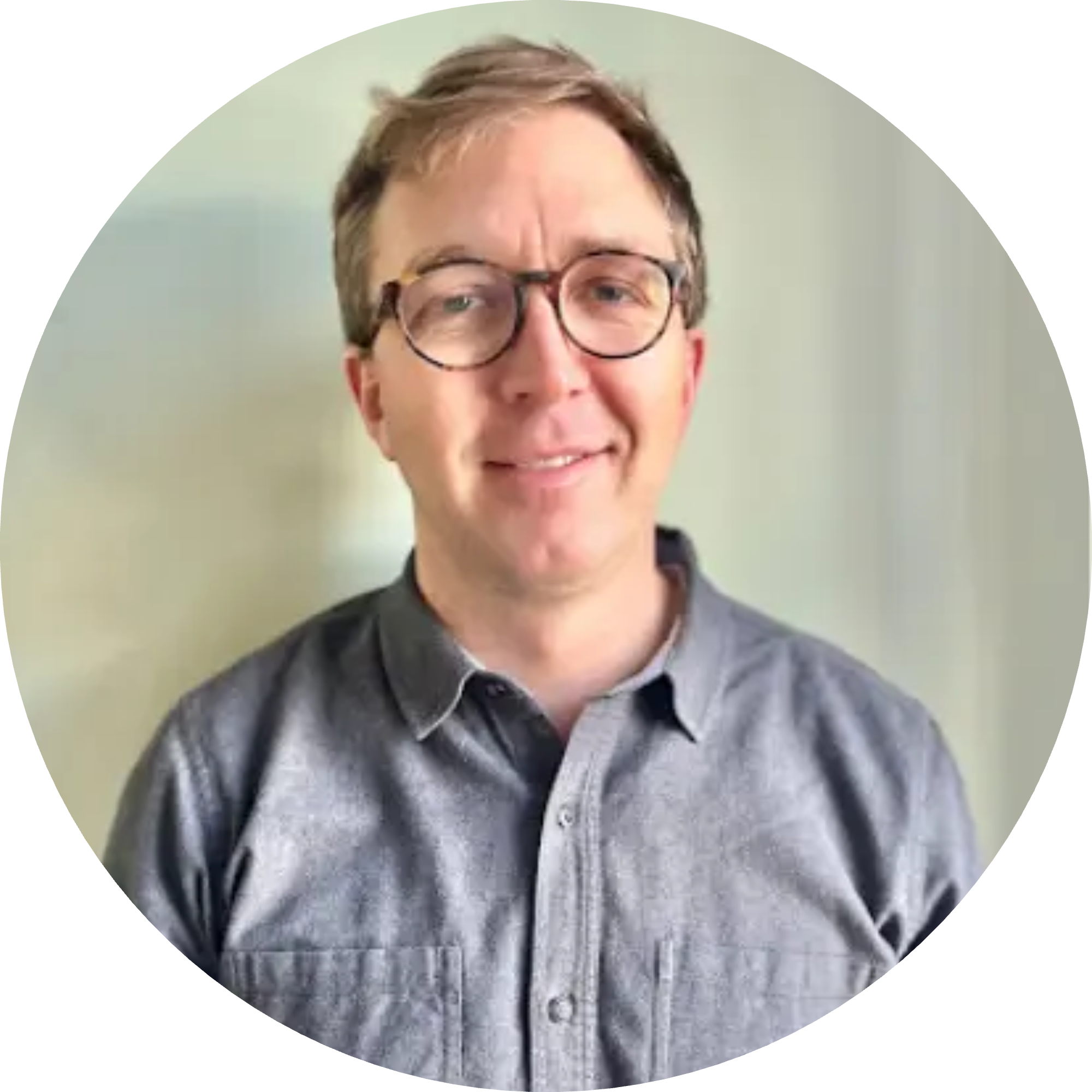
Nick Kahm, PhD
Co-Founder
Nick Kahm, a former philosophy faculty member at St. Michael's College in Colchester, VT, transitioned from academia to running the Kahm Clinic with his mother. He started the clinic to train dietitians in using Metabolic Testing and Body Composition Analysis for helping people with eating disorders. Now, he is enthusiastic about expanding eating disorder treatment through the Kahm Center for Eating Disorders in Vermont.
