

My mother, Annika Kahm, is a registered dietitian who has spent more than 35 years treating eating disorders, work shaped from the start by her own recovery from anorexia and bulimia in her teens and early twenties. Her experience, along with the success stories I grew up hearing about her work, convinced us both that recovery in partial hospitalization (PHP) and intensive outpatient (IOP) programs, the levels of care that provide hours of structured treatment while a person continues living at home, is strongest when a team and a group of peers work together in the same room. We opened The Kahm Center on that conviction, and it became the first in-person eating disorder PHP and IOP in Vermont. It remains the only one today.
That conviction is worth explaining, because it shapes everything about how the center works.
Healing in the Company of Others
An eating disorder can narrow a person’s world until much of the day is spent alone with the illness, where its thinking meets little challenge. Treatment in a shared space works against that narrowing from the moment a patient walks in. Hours spent alongside peers who understand the struggle, guided by a team that is physically present, give recovery a social footing that isolation had taken away.
Much of the work of recovery rests on the therapeutic alliance, the trust between a patient and the people treating them. That trust grows in structured sessions and also in the unplanned conversations before a group or in the hallway. Over time, staff come to know each patient well enough to notice when something has shifted. A hard moment in the middle of the day can be met right away, with a therapist or mental health technician a short walk down the hall.
Recovery also has to hold up around other people. Eating with others and speaking honestly about painful experiences are skills built through repeated exposure, and each repetition with peers in the room tends to make the next one more manageable. In front of a camera at home, those opportunities shrink.
Attention and engagement are difficult to sustain through a screen, and the years of remote school showed how much that can cost. In 2022, fourth and eighth graders across the country posted the largest drops in math scores ever recorded on the national assessment, and students in many countries lost roughly a third of a school year’s worth of learning during the pandemic. Being logged in proved to be a poor substitute for being present, and recovering from an eating disorder asks far more of a person than a school day does.
Nutrition at the Center of Recovery
Nutrition sits at the core of eating disorder treatment. Disrupted eating over months or years takes a toll on the body, and nutritional rehabilitation, the process of restoring consistent and adequate nourishment, gives both the body and the brain what they need to heal. Therapy and nutrition depend on each other: an undernourished brain can struggle to engage fully in therapy, while the thoughts and urges therapy addresses can stand between a person and their next meal.
Meals are often the hardest part of a treatment day, and they are where the trust built elsewhere gets tested. Eating disorder behaviors at the table can be subtle, and the urges behind them may surface in hesitation or a change in expression before anything is said aloud. Staff at the table can read those cues as they happen and coach a patient through the moment while the meal is still in front of them. That support helps someone follow through on their meal plan when the eating disorder is pushing hardest against it. Through a screen, where behaviors are easy to miss, it is much harder to provide well.
Being on site also makes it possible to track nutritional healing closely. Annika has been a pioneer in bringing metabolic testing and body composition analysis into eating disorder treatment, and she co-authored Measuring Health from the Inside on the value of these tools. The measurements look at how the body is functioning internally, with no focus on shape or size. Regular testing at the center shows the team how a patient’s body is responding to their meal plan, so the plan can be adjusted as soon as something changes.
These tools also move care beyond BMI, an outdated measure that says little about what is happening inside the body. An eating disorder can be just as medically serious in a larger body, yet a BMI in the “normal” or “high” range can lead insurers to question whether someone needs a higher level of care. Metabolic and body composition data give the treatment team concrete evidence of a patient’s medical needs, which can help advocate for coverage for people in every body size.
Treatment Within Reach for Vermont Families
For a long time, a Vermont family whose loved one needed more than weekly therapy for an eating disorder had to decide how far they were willing to travel. PHP and IOP did not exist in person anywhere in the state. Getting that support meant leaving Vermont, and with it the daily routines and relationships where recovery would eventually need to take hold. Much of the value of PHP and IOP lies in carrying new skills back into ordinary life at the end of each day, and that is difficult to do from out of state. Living in Vermont, I saw firsthand how limited the options were for families here.
A program close to home widens access only if families are able to use it, and cost can be another major barrier to care. The Kahm Center is in-network with Vermont Medicaid, along with Blue Cross Blue Shield, Cigna, and United. Medicaid coverage brings a higher level of care within reach for Vermonters who would find private-pay treatment or an extended stay out of state impossible to manage. When a family’s insurer falls outside that network, the center has had strong success securing single-case agreements with most other insurance companies, so a plan missing from the list is still worth a call.
Without a middle level of care, people get sicker. When the only choices are an hour of therapy a week or leaving the state, a family can spend months watching someone they love lose ground, waiting for the illness to become severe enough to justify residential or inpatient treatment. Eating disorders can progress quickly, and each stretch without enough support gives the illness more time to take hold in the body and mind. Every person should be able to reach intensive treatment close to home as soon as weekly therapy stops being enough, before going away becomes the only option left.
Insurance shapes what happens after residential treatment as well. Families who have been through residential care may know the feeling of an insurance company deciding a loved one is ready to leave before the treatment team does, and moving from round-the-clock support to weekly outpatient appointments is a steep drop at a fragile point in recovery. A PHP or IOP in Vermont gives that patient a structured place to keep going close to home.
Expanding In-Person Care Across Vermont
For patients who live farther from Burlington, the center offers a hybrid option that pairs some virtual days with regular in-person days and testing, an arrangement that has also occasionally allowed programming to continue on a day when snow would otherwise have closed the center. As an adjunct to in-person treatment, it supports the larger goal of bringing in-person care within reach of more Vermonters. For people in remote areas, virtual care has brought meaningful support that is far better than no treatment at all.
The Kahm Center was built on the belief that people recover from eating disorders, and on a commitment to measuring that recovery with care. Alongside metabolic testing and body composition analysis, which track internal markers of health throughout treatment, the center measures symptom improvement across its programs and shares its outcomes so families can see what progress here has looked like. For anyone unsure whether this level of care is the right step, those results can be a useful place to start the conversation.
If you or someone you love needs more support than weekly therapy can provide, reach out to The Kahm Center, and we can talk through the next step together.
Clinically Reviewed By
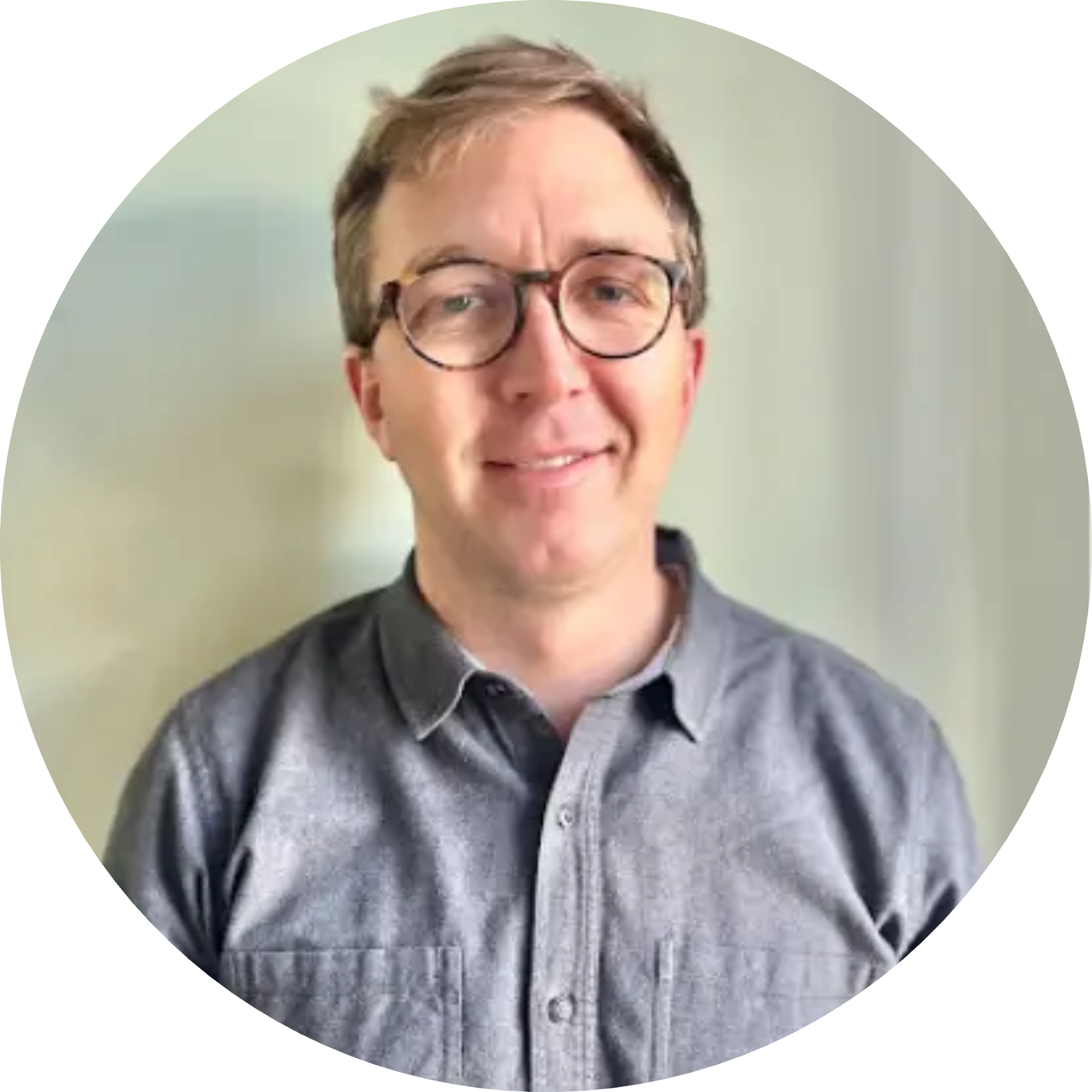
Nick Kahm, PhD
Co-Founder
Nick Kahm, a former philosophy faculty member at St. Michael's College in Colchester, VT, transitioned from academia to running the Kahm Clinic with his mother. He started the clinic to train dietitians in using Metabolic Testing and Body Composition Analysis for helping people with eating disorders. Now, he is enthusiastic about expanding eating disorder treatment through the Kahm Center for Eating Disorders in Vermont.
